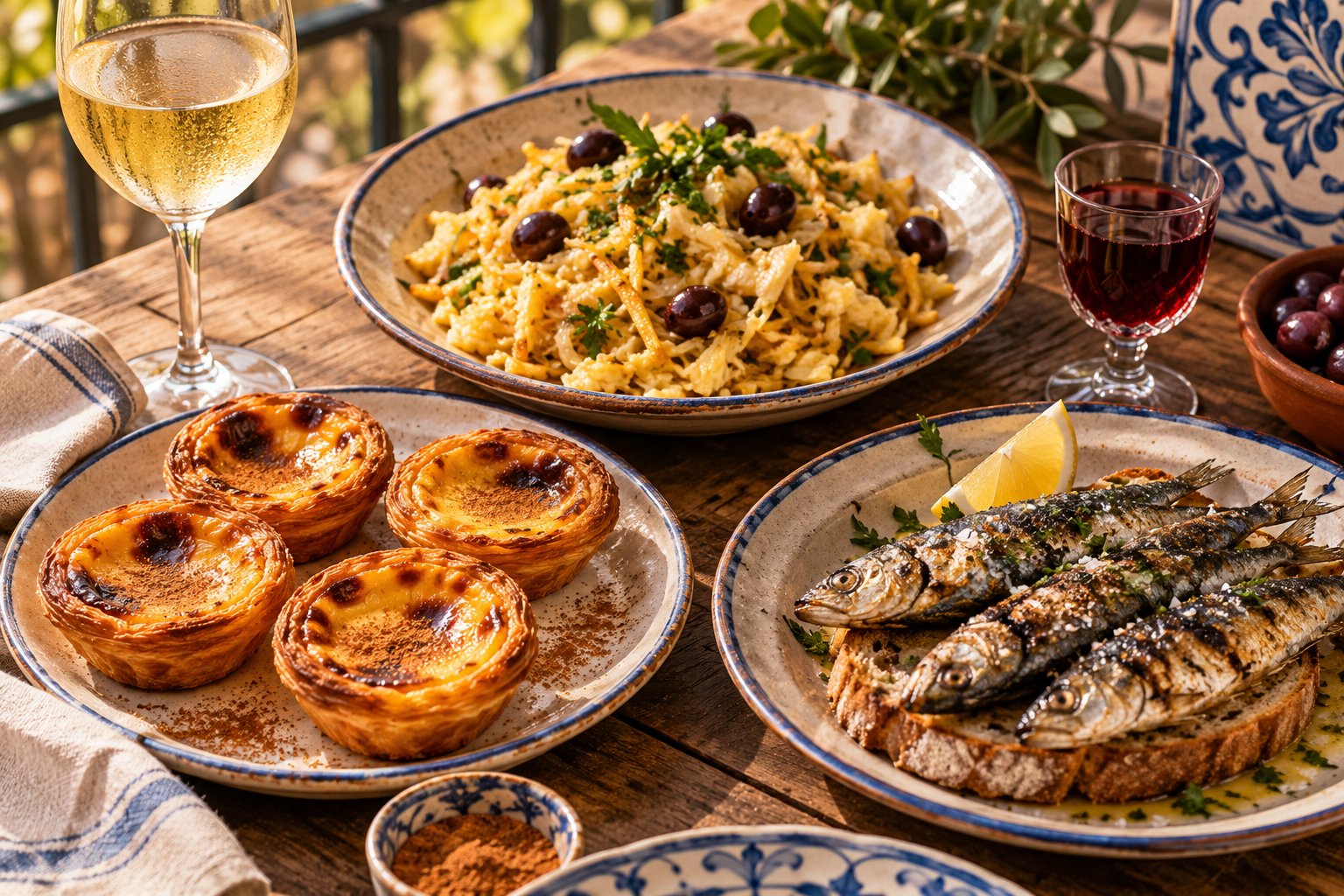
Portuguese food isn't fussy, and that's the appeal. It's built on good fish, good bread, olive oil and a lot of patience, served in portions that make it hard to leave hungry. If you're heading to Lisbon, Porto or anywhere in between, these are the dishes worth ordering, and a few tips that make eating out easier.
Pastel de nata
The famous custard tart, with a flaky shell and a creamy centre that's slightly burnt on top. You'll find them in every bakery, but the best ones come warm, with a shake of cinnamon. In Lisbon, Pastéis de Belém is the original and always has a queue, though it moves quickly. Manteigaria is a popular alternative if you'd rather skip the line. Plan on having more than one.
Bacalhau
Salted cod is the national obsession, and there's a long-running claim that Portugal has a different bacalhau recipe for every day of the year. Bacalhau à Brás, shredded with eggs, onions and fried potato, is the easiest place to start. It's comforting rather than fishy, and you'll see it on most traditional menus.
Francesinha
Porto's answer to the heavy sandwich: bread layered with ham, sausage and steak, covered in melted cheese and a thick tomato and beer sauce, often topped with a fried egg. It's a lot of food, so go hungry or share. Plenty of cafés in the city serve it, and locals will happily argue about who does it best. We touched on it in our weekend guide to Porto.
Grilled sardines
Simple, cheap and very Portuguese. Sardines are grilled whole over charcoal and served on a slice of bread with potatoes or salad. They're at their best in summer, and Lisbon's June festivals fill the streets with the smell of them. Outside the season you'll still find them, but ask what's fresh.
Polvo à lagareiro
Octopus, roasted until tender and served with potatoes and plenty of olive oil and garlic. It's a good one for people who think they don't like octopus, because done properly it isn't chewy at all.
Bifana
A pork sandwich, and one of the best cheap lunches in the country. Thin slices of marinated pork in a soft roll, usually with mustard. Perfect when you want something quick between sights.
Caldo verde
A simple soup of potato, finely shredded kale and slices of chouriço. It's hearty, cheap, and especially good on a cold evening, which is worth knowing if you're travelling in autumn or winter.
What to drink
Vinho verde is a light, slightly fizzy wine from the north, ideal with seafood and on a warm day. Port comes from the Douro Valley and is easiest to learn about in the cellars of Vila Nova de Gaia, across the river from Porto. In Lisbon, ginjinha is a sour cherry liqueur served in tiny cups, often at small hatch-style bars, and it's more fun to try once than to explain.
See Lisbon food and wine tours on Viator
Where to eat
For a quick, varied introduction, the markets are a good place to start. Time Out Market in Lisbon puts a lot of well-known restaurants under one roof, and we covered it in our guide to the best food markets in Europe. For something more local, look for a tasca, a small family-run place with a short menu and plain decor. The daily specials, written on a board or recited by the waiter, are usually the best value.
A few restaurant tips
- The couvert isn't free. Bread, olives and cheese often appear on the table as soon as you sit down, but you're charged for whatever you eat. If you don't want it, say so politely and they'll take it away
- Lunch is the bargain. Many restaurants offer a prato do dia, a set lunch that often includes a main, a drink and sometimes coffee, for much less than dinner
- Portions are generous. Many dishes are meant to be shared, and a half portion (meia dose) is often available if you ask
- Dinner starts late. Kitchens often open around 7:30pm, and the busiest tables are usually booked for 8pm or later
Want a local to take you round the best spots?
Browse food tours on GetYourGuide