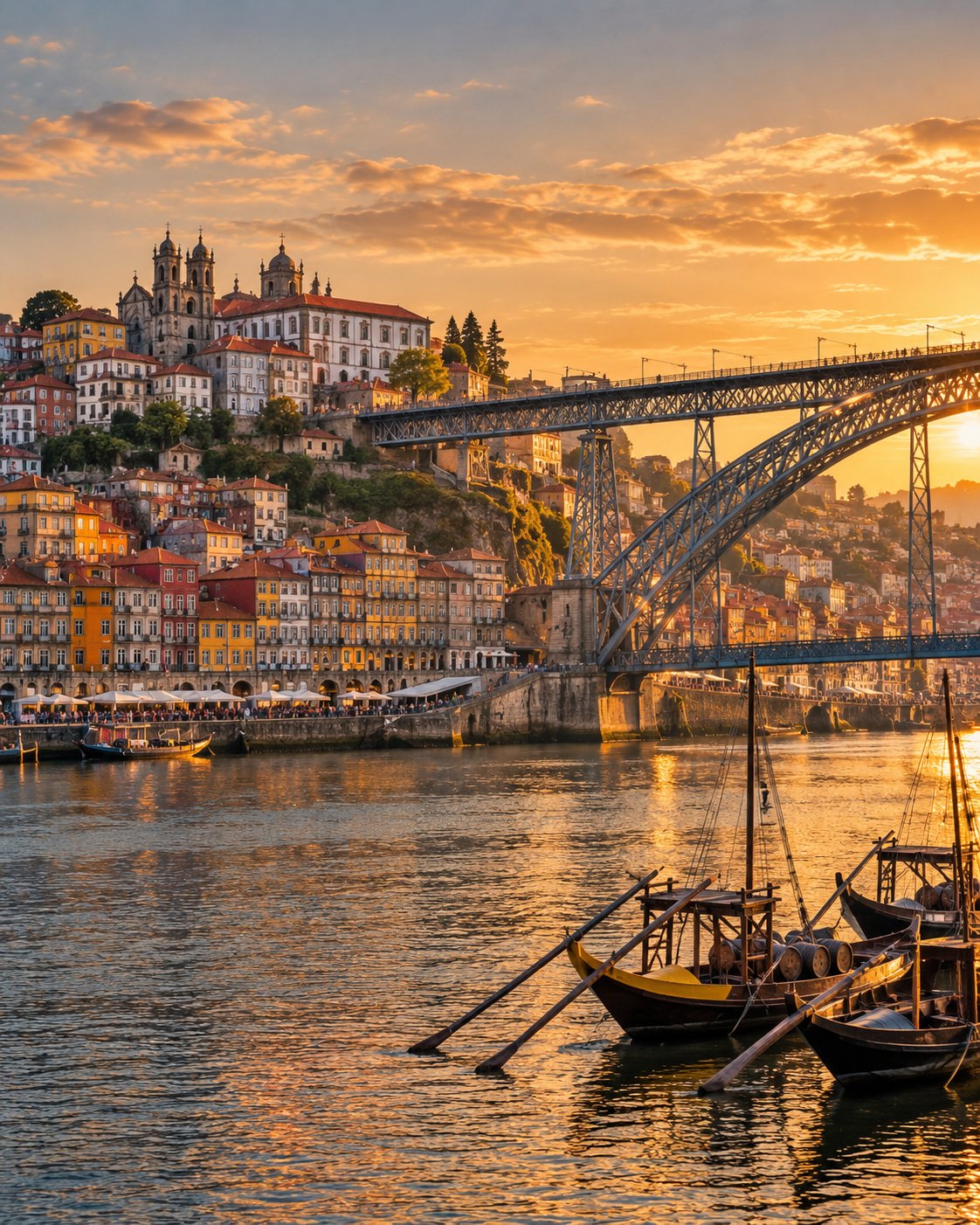
Porto doesn't try as hard as Lisbon to win you over, and that's exactly why people fall for it. It's smaller, steeper, and a bit rougher around the edges, with tiled buildings stacked up a hillside above the Douro river and port wine cellars you can actually visit. Two days is enough to get a proper feel for it, and it's an easy direct flight from most UK airports, which makes it one of the better weekend options going.
Where to stay
Ribeira, the riverside old town, puts you right in the middle of everything and looks stunning at night, but it's also the busiest and noisiest part of the city. Staying a little further up the hill, around Cedofeita or Bonfim, gets you a quieter base that's still a short walk from the centre, often at a better price.
Day one: the old town and the river
Start in Ribeira itself, the tangle of narrow streets and tiled houses that runs down to the riverfront. Walk along the water and up onto the lower deck of the Dom Luís I Bridge for the view back across to the hillside, it's one of those spots that looks exactly like the postcards.
From there, cross the bridge to Vila Nova de Gaia, where almost all of Porto's port wine houses have their cellars. This is the one thing worth planning ahead for, a tour and tasting at a house like Graham's, Taylor's or Sandeman gives you the history behind the drink and usually ends with a glass or two on a terrace looking back at the city.
See Douro Valley wine tours from Porto on Viator
Back on the Porto side, spend the rest of the afternoon wandering up into the centre. São Bento train station is worth a stop just for the hall, covered floor to ceiling in blue and white azulejo tiles depicting scenes from Portuguese history, and it costs nothing to walk in and look. Nearby, Clérigos Tower gives you a proper view over the rooftops if you're happy to climb the stairs, and Livraria Lello, one of the most photographed bookshops in the world, is just around the corner, though you'll need a timed ticket that goes towards a book purchase to get in.
Day two: markets, beaches and a slower pace
Spend the morning at Mercado do Bolhão, Porto's restored historic market, good for a coffee, a pastel de nata, and a wander through stalls of fresh produce, fish and flowers. It's a smaller, calmer alternative to the bigger food halls in other European cities, and genuinely still used by locals rather than built purely for visitors.
In the afternoon, take the tram or a short taxi out to Foz do Douro, where the river meets the Atlantic. There's a promenade, a lighthouse, and a proper seaside feel that most people don't expect from a city break. It's a good spot for a late lunch of fresh seafood before heading back for the evening.
Where to eat and drink
Porto does simple food well. A francesinha, the city's famous sandwich stacked with meats, covered in melted cheese and a thick beer-spiked sauce, is worth trying once even if it isn't for everyone. For something lighter, look for a tasca, a small family-run restaurant serving grilled fish or bacalhau, usually with a short menu and no English translation, which is normally a good sign. Port wine isn't just for the cellars either, plenty of bars in Ribeira pour it by the glass as an evening drink rather than a dessert pairing.
Getting around
Porto's centre is walkable, but it's hilly, properly hilly, so pace yourself or lean on the metro and tram lines when your legs give out. The Andante card covers public transport across the city and is worth picking up if you're not planning to walk absolutely everywhere.
If you're planning to explore further afield, the Douro Valley wine region is a straightforward day trip from Porto by train or organised tour, worth considering if you're staying three days rather than two.
Thinking about hiring a car to see more of the Douro Valley?
Compare car hire in Porto on DiscoverCarsGood to know
- Porto works well as a family trip too, the hills and cobbles need a bit of planning with a buggy, but the sights, trams and riverside walks suit most ages fine
- Flights from the UK take around 2.5 to 3 hours from most major airports, with several budget carriers running direct routes
- Spring and autumn are the easiest times to visit, summer gets hot and the port wine cellars get busy, so book tastings ahead if you're going in July or August