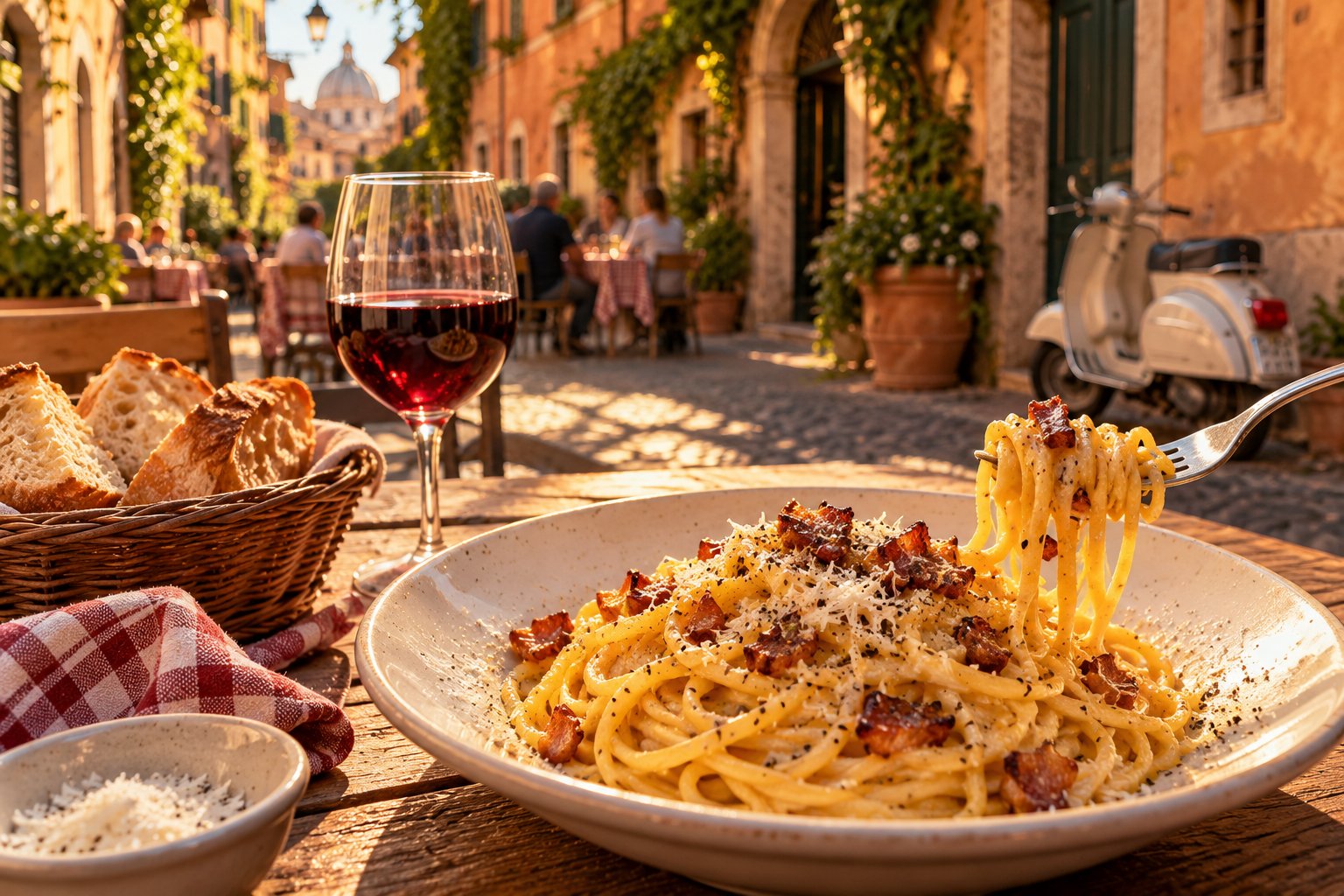
Rome is one of the easiest cities in Europe to eat well in, and one of the easiest to eat badly in. The dishes are simple and cheap when you go where locals go. Near the big sights, the same dishes can cost twice as much and taste worse. Here's what to order, what to try on the move and how to spot a tourist trap. Prices are in euros, and they vary between guides, so treat them as a rough guide and check the current exchange rate before you go.
The four Roman pastas
Rome has a small set of classic pasta dishes, and most trattorias do them:
- Carbonara: guanciale (cured pork cheek), egg and pecorino cheese. There's no cream in the real thing
- Cacio e pepe: just pecorino and black pepper, which sounds simple and is harder to get right than it looks
- Amatriciana: tomato, guanciale and pecorino
- Gricia: essentially an amatriciana without the tomato, sometimes called the "white amatriciana"
At a trattoria away from the main sights, expect to pay roughly €10 to €15 for one of these. Near the Spanish Steps or the Colosseum, the same plate is often €25 or more. If you only have one proper sit-down meal, make it one of these.
Other dishes worth knowing
- Carciofi alla giudia: whole fried artichokes from the old Jewish Ghetto, crispy outside and tender inside. One guide says artichokes are a spring dish, so if you see them on a menu in summer or autumn, ask whether they're in season
- Coda alla vaccinara: braised oxtail, a classic from the Testaccio area
Street food and snacks
You can eat very well for little money in Rome without sitting down.
- Supplì: fried rice balls with melted mozzarella in the middle, usually €2 to €3 each. Supplizio, near Campo de' Fiori, is one name that comes up
- Pizza al taglio: pizza by the slice, sold by weight, usually €2 to €4 a slice. Pizzarium, near the Vatican Museums, is the gourmet pick, and Pizzeria La Montecarlo near Piazza Navona is a cheaper option
- Trapizzino: a pocket of crispy pizza bianca filled with something like braised meat, about €3.50 to €5. The original is in Testaccio
- Porchetta sandwich: slow-roasted pork in bread, around €5 to €6, found at Mercato Testaccio and several stalls
- Maritozzo: a sweet bun filled with cream, a classic breakfast treat. Roscioli Caffè is one place to try one
Carry some cash in small notes, because some vendors don't take cards.
Gelato and coffee
A scoop of gelato is usually about €2.50 to €4. Gelateria dei Gracchi and Fatamorgana are two names that come up for good gelato, and Giolitti is the old classic. For coffee, do what Romans do and stand at the bar. A coffee or cappuccino at a normal bar is about €1 to €1.50, and a cornetto and coffee together usually come to €1.50 to €3. Sitting down can cost more than double. One guide found a coffee at a famous bar was €2.90 standing and €5.10 at a table.
Where to eat
The simplest rule is to walk a few streets away from the big sights. These areas have a more local feel:
- Testaccio: the home of Roman cooking, with a market and old trattorias. Da Felice is known for cacio e pepe
- Trastevere: busy with visitors but still full of good places. Da Enzo al 29 is a popular choice
- Monti: close to the Colosseum, with pasta at about €14 to €18 rather than the €25 and more charged near the Spanish Steps
- Prati: by the Vatican, a good alternative to the tourist restaurants outside the museums
- Pigneto: a lively area for a more local, relaxed evening
How to spot a tourist trap
- Photo menus in several languages, especially long ones that mix pizza, pasta, sushi and burgers
- Staff outside trying to pull you in
- Prices that look high. One guide says if a simple margherita costs more than about €10, you're probably in a tourist trap
- A restaurant right on a crowded square. Walk a few streets away and prices drop
- Missing details on the menu. The cover charge should be listed. If it isn't, ask before you sit down
What it costs
- Coperto: a cover charge of about €1 to €3 a head for bread and table service. It isn't a tip, and it should appear on the menu
- Tipping: optional. Rounding up or leaving a few euros for good service is normal
- A full trattoria meal with house wine: roughly €25 to €45 a head, per one guide
- Meal times: Romans eat lunch from around 12:30 to 2:30pm and dinner from around 8pm. Restaurants that open at 7:30pm tend to be for tourists
If you'd rather have a guide
A food tour is a good way to skip the guesswork, especially on a short trip. We've picked three that suit different travellers. It's worth checking what's included, the group size and the price before you book.
- For an evening out: the Trastevere evening food tour on Viator
- For eating on the move: the Rome street food tour with a local guide on Viator
- For a broader taste of the city: the Rome best tasting tour on Viator, for eating like a local
A simple food plan for a weekend
- Breakfast: a cornetto or maritozzo and a coffee at the bar
- Lunch: pizza al taglio, a supplì or a porchetta sandwich
- Afternoon: gelato
- Dinner: one of the four pastas, somewhere away from the main sights, booked if it's popular
Rome is also on our list of best city breaks from the UK in November, where you'll find more on planning the trip. If food is your reason for travelling, our guides to the best food markets in Europe, what to eat in Portugal and what to eat in Copenhagen are worth a read. Our Trip Budget Calculator can help you work out what to set aside for eating out, using "My own numbers".
Where this comes from
Menus and prices change, and the guides below don't always agree, so this is a snapshot checked on 13 October 2026. These are the sources it draws on:
- Classic dishes, coperto and meal times: Rome food guide, Visit Rome
- Tourist traps and tipping: How to spot a tourist trap restaurant in Rome, Visit Rome
- Street food and snacks: Rome street food, Visit Rome
- Cheap eats: Cheap eats in Rome, Visit Rome
- Neighbourhoods, coffee prices and avoiding tourist traps: Authentic Rome: best food and how to avoid tourist traps, Eating Europe