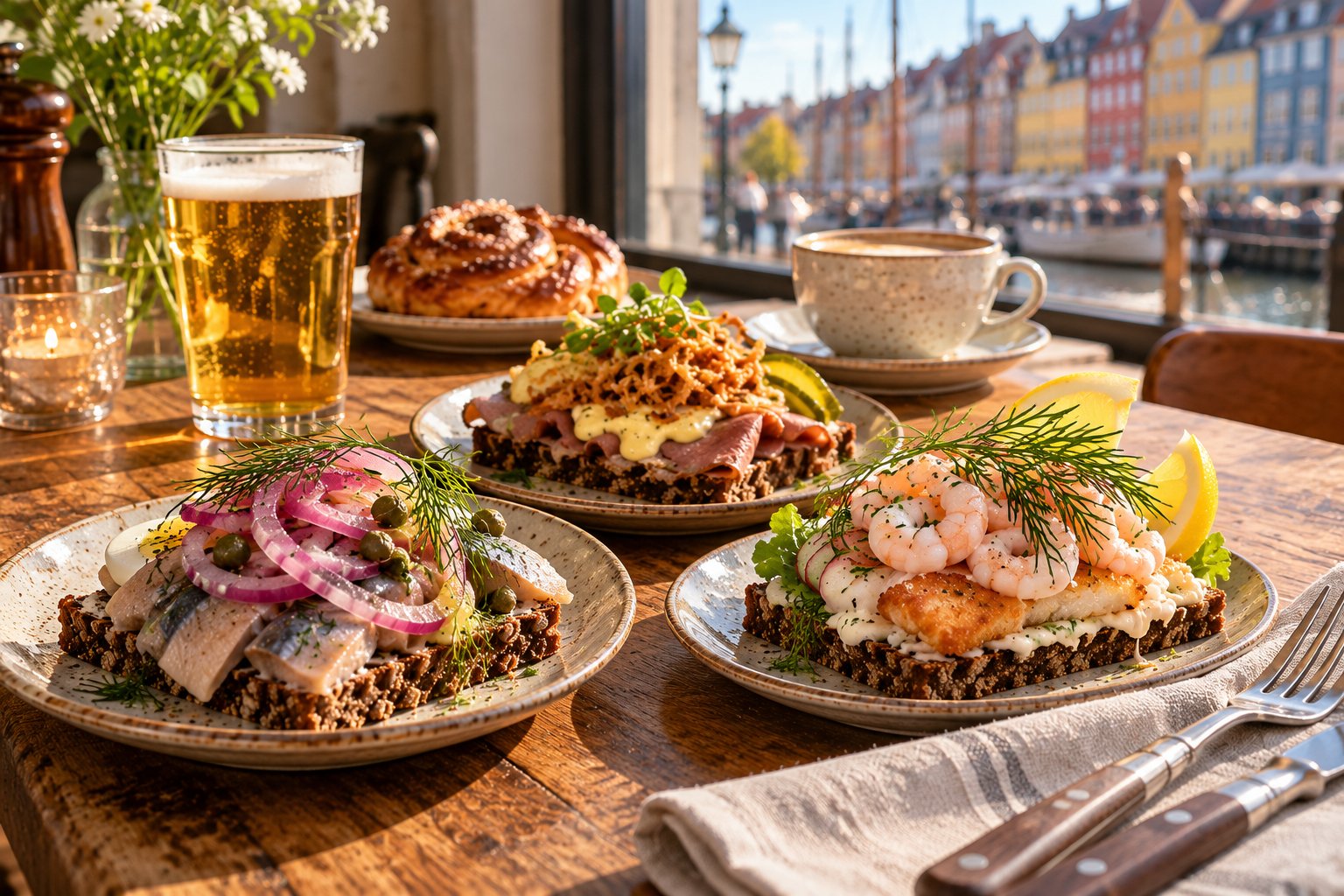
Copenhagen has a serious food scene, but you don't need a tasting menu to eat well here. The classics are simple: open sandwiches on rye bread, buttery pastries, a hot dog from a street stand. The trick is knowing what to order, when to go and which places are worth the money. Here's a practical guide, with rough prices in kroner (DKK). As a guide, there are around 9 kroner to the pound.
Smørrebrød: the one thing to try
Smørrebrød is an open sandwich on dense, slightly sour rye bread called rugbrød. The bread is always buttered, and it's topped with something specific: pickled herring, cold roast beef with remoulade and crispy onions, plaice with shrimp and dill, or liver pâté with pickled beetroot. It isn't build-your-own, because each topping has a set combination.
A few things to know before you go:
- It's a lunch. Most restaurants serve it from around 11:30 until 3pm or 4pm, and some dishes run out later in the afternoon
- Order three or four pieces for a proper lunch, or two different ones from a market stall. Don't order two of the same
- Use a knife and fork. Picking it up by hand is how you spot a first-timer
- Book ahead for the well-known places, especially at weekends and in summer
- The bread contains gluten. If you need to avoid it, ask for a potato or lettuce base
For traditional, try Restaurant Schønnemann (open since 1877) or Restaurant Palægade, both in the centre. Told & Snaps is a relaxed alternative, and Ida Davidsen has been selling smørrebrød since 1888. For a more modern take, Selma and Aamanns are the names that come up most. Aamanns also has a branch at Copenhagen Airport, which is handy for a last meal before you fly.
On price, one guide puts individual pieces at the traditional restaurants at roughly DKK 100 to 175 each (about £11 to £19), so a three or four piece lunch with a drink can reach DKK 500 to 700 a head. Cheaper options exist. Hallernes Smørrebrød in Torvehallerne starts from around DKK 80 a piece, and one budget cafe was listed at about DKK 89 for three. Prices change, so check menus before you go.
One thing to avoid is the tourist restaurants along Nyhavn. The harbour is worth seeing, but one guide calls the food there overpriced, and you'll get better smørrebrød a few streets away.
Pastries and bakeries
What the rest of the world calls a Danish pastry is wienerbrød, which means "Viennese bread". The name comes from Austrian bakers who worked in Copenhagen. Look out for:
- Kanelsnegle or kanelsnurrer: cinnamon swirls, soft and sticky
- Tebirkes: a flaky pastry with poppy seeds, traditionally eaten for breakfast with coffee
- Spandauer: a round pastry with a raised edge and a vanilla custard filling
The bakeries that get the most mentions are Juno the Bakery in Østerbro, known for cardamom swirls, and Hart Bageri, which has several branches and a good almond croissant. Sankt Peders Bageri, founded in 1652, sells its kanelsnegle only on Wednesdays. Both Juno and Hart can have queues, so go early. If you want something simple, Lagkagehuset is a reliable chain for the classics.
Two sweet things worth trying: flødeboller, chocolate-coated marshmallow domes, and romkugler, rum truffles found in most good bakeries.
Cheap eats
Copenhagen is expensive, but you can eat well for less if you know where to look.
- Hot dogs: a pølse from a street stand, usually the red sausage with remoulade and crispy onions, is around DKK 40 (about £4.50)
- Food halls: Torvehallerne, by Nørreport, has smørrebrød counters, coffee, bread and more under one roof. Tivoli also has a food hall with 15 stalls, which is useful if you're visiting the park
- Street food: Reffen is a waterfront street food village with lunches at around DKK 100. It runs from spring to autumn, so check it's open before you go
- Lunch deals: some places charge noticeably less at lunch than in the evening. One vegetarian buffet in the centre was listed at DKK 119 at lunch against DKK 185 in the evening
- Supermarkets: Netto is fine for breakfast, snacks and picnic supplies
If you'd rather have someone show you around, a guided option such as this walking food tour with Secret Food Tours on Viator takes you to several stops in one go. It's worth checking what's included and the price before you book.
What to drink
Carlsberg and Tuborg are everywhere, but Copenhagen's craft scene is better. Mikkeller, To Øl and Amager Bryghus are the breweries to look for. With smørrebrød, a cold lager is a perfectly normal choice, though snaps (aquavit) is the traditional pairing, especially with herring. It comes ice-cold in small glasses and is entirely optional. Tap water is safe, so just ask for "vand".
Fine dining
Copenhagen has some of the best-known restaurants in Europe, among them Geranium, Alchemist, Kadeau and Noma. They're a big spend and need booking well ahead. If that's not your thing, you won't miss out. Most visitors eat just as well on a smørrebrød lunch and a bakery stop.
A simple food plan for a weekend
- Morning: a bakery stop for a kanelsnegle and a coffee
- Lunch: smørrebrød, booked if it's a well-known place, otherwise a market stall
- Afternoon: a hot dog or a second pastry
- Dinner: something lighter, or street food, since lunch will have been the big meal
For the rest of your trip, see our weekend guide to Copenhagen, which covers getting in from the airport, the Copenhagen Card and Tivoli. If you love planning a trip around food, our guides to the best food markets in Europe and what to eat in Portugal are a good next read. If you're planning to see plenty of paid sights as well, our guide explains whether the Copenhagen Card is worth it, and you can buy the Copenhagen Card on Viator. You can also use our Trip Budget Calculator and choose "My own numbers" to work out how much to set aside for eating out.
Where this comes from
Menus and prices change, so this is a snapshot checked on 8 October 2026. These are the guides it draws on:
- Dishes, drinks and bakeries: Danish food in Copenhagen: what to eat and where, Xyu and Beyond
- Smørrebrød, how it works and prices: Smørrebrød in Copenhagen, Nomado Travel and Where to eat Danish smørrebrød, AFAR
- Cheap eats: Where to find cheap and tasty food in Copenhagen, Routes North
- Pastries: Best bakeries in Copenhagen, Copenhagen by Mie