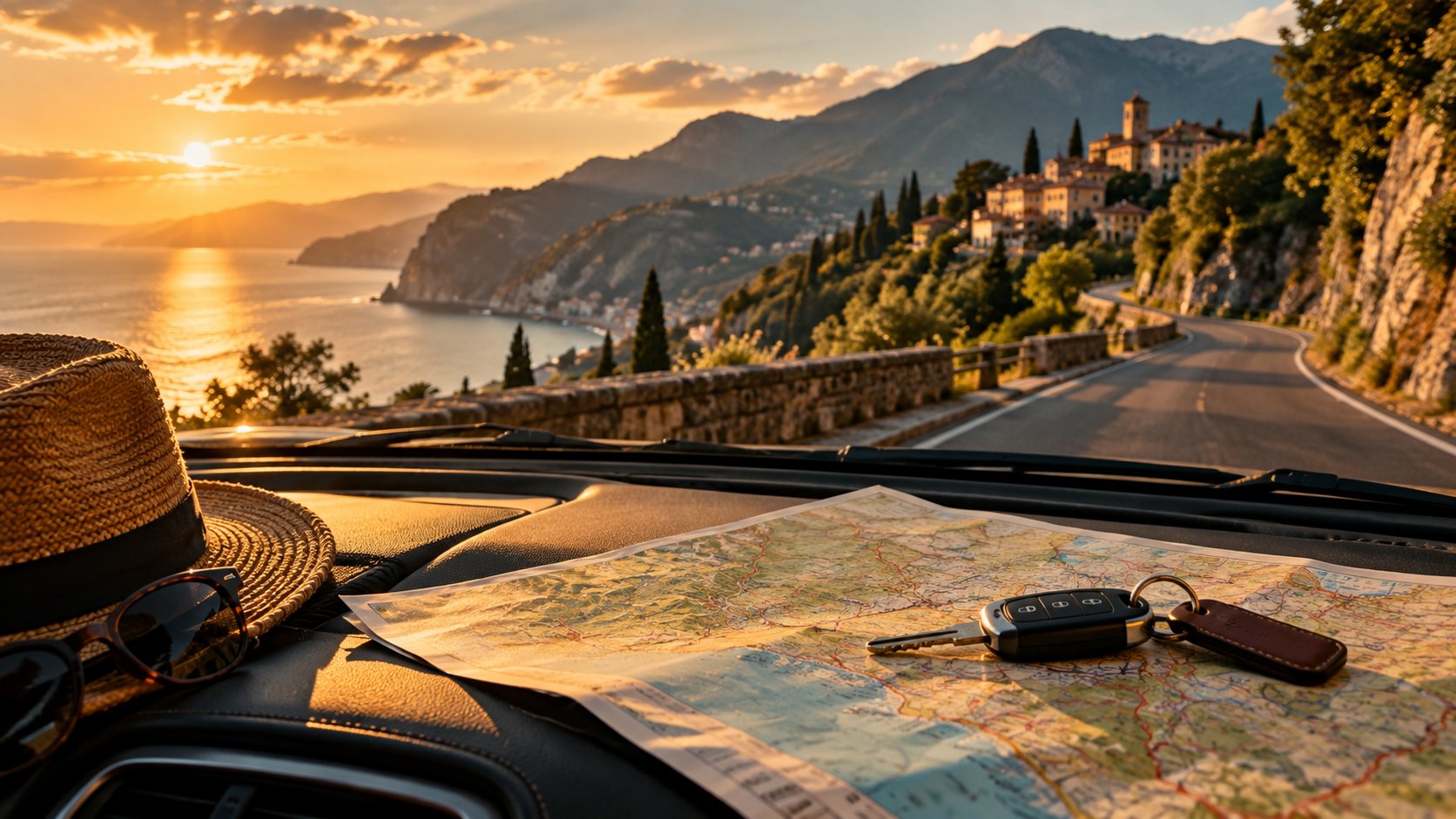
A road trip across Europe sounds simple until you start planning it properly, different toll systems, different speed limits, and a lot of small rules that vary by country and catch people out. None of it is complicated once you know what to check. Here's what actually matters.
Plan the route around driving time, not distance
A map makes two countries look close together, but mountain roads, city traffic and border queues can turn a short-looking drive into a long day. A good rule of thumb is no more than four to five hours of actual driving per day if you want time to stop and enjoy the places along the way, rather than just passing through them. Build in a buffer day every few days, somewhere you stay two nights instead of one, so the whole trip doesn't feel like a checklist.
Tolls and vignettes vary a lot by country
This is the part that trips people up most. Some countries charge tolls per distance driven, others use a flat vignette you buy for a set period, and a few use both depending on the road.
- France, Italy and Spain mostly use distance-based tolls on motorways, paid at booths or electronically as you go
- Austria, Switzerland, Slovenia and the Czech Republic require a vignette (a sticker or digital pass) just to use the motorway network at all, bought in advance or at the border
- Germany has no toll for regular cars on motorways, one of the few countries where that's true
Buy vignettes before you cross the border where possible, queuing at a service station on the other side wastes time you didn't plan for. If you've hired the car, check whether tolls and vignettes are included or need sorting yourself, this varies by rental company.
Know the rules before you cross a border
Speed limits, drink-drive limits and equipment requirements all change country to country, and ignorance isn't an accepted excuse if you're stopped.
- A warning triangle and hi-vis vest are required in the car at all times in countries like France, Spain, Germany and Austria, not just when you break down
- Winter tyres are mandatory during certain months in countries like Germany, Austria and Sweden, even if it isn't snowing on the day you're driving through
- Drink-drive limits are lower than the UK's across most of Europe, and zero in countries like the Czech Republic, Hungary and Slovakia, so don't assume the same rules apply everywhere
- Low Emission Zones exist in many city centres now, including Paris, Milan and several German cities, and need a sticker or registration arranged in advance, this catches out a lot of visiting drivers
Sort the car itself before you go
If you're renting rather than taking your own car, book well ahead for a road trip since you'll want a specific car type for comfort over several days, not whatever's left at the counter. Worth reading up on what the insurance actually covers too, since a road trip across several countries puts more wear on a rental than a week in one place.
Already covered what to check before you book a rental car.
Renting a car in Europe: what to actually knowCompare road trip car hire on DiscoverCars
A few practical extras
- Download offline maps for each country before you go, mobile signal drops out more than you'd expect in rural and mountain areas
- Keep paper copies of your documents (licence, insurance, passport) separate from the originals, in case anything gets lost
- Pack a phone mount and a way to charge devices in the car, a dead phone with no map is a genuinely bad day
- Check your UK driving licence and insurance green card requirements for each country on the route, they're generally fine but worth a quick check rather than an assumption
Cover yourself for the whole trip, not just the flights.
Check SafetyWing's travel insurance cover