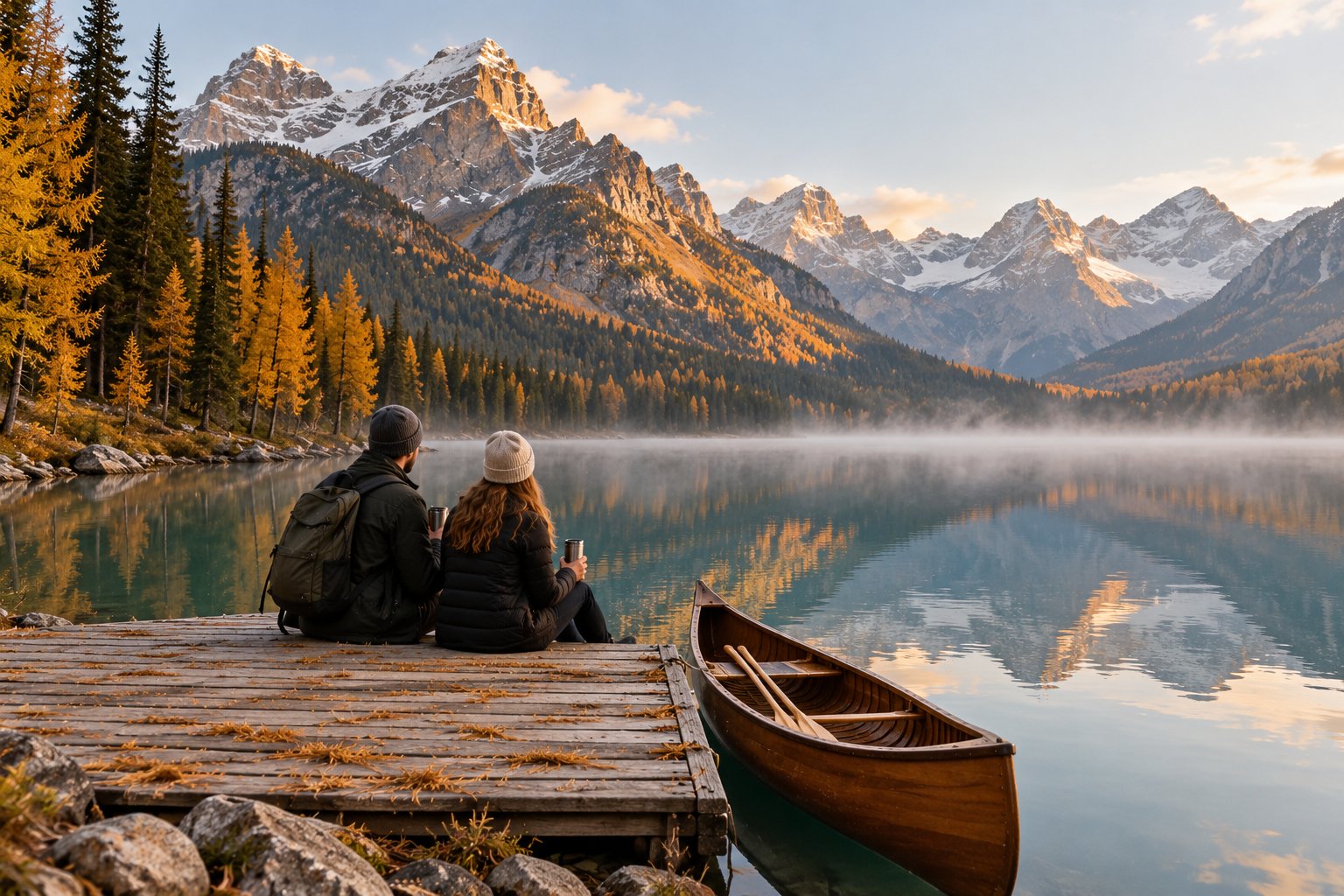
Canada is huge, and the biggest mistake first-timers make is trying to see too much of it. This guide covers what UK visitors need to know before booking: the entry permit, flights, when to go, how to pick a region and what to budget. Prices are in Canadian dollars unless we say otherwise, change often and come from the sources listed at the end, so check official sites before you book.
Entry: you need an eTA, not an ESTA
British citizens who fly to Canada need an Electronic Travel Authorization (eTA). It costs CAD $7, is valid for up to five years or until your passport expires (whichever comes first), and most people are approved by email within minutes. Some requests take several days if the authorities ask for extra documents, so apply before you book your flights.
- Apply only on the official Government of Canada website. Other sites charge much more for the same thing
- It's linked to your passport. Use the passport number from the photo page, and travel on that same passport. A new passport needs a new eTA
- You only need it to fly. Arriving by land or sea (including from the US by car or bus) doesn't require one
- Each person applies separately, with a passport, an email address and a credit card
Getting there
According to Flight Centre, direct flights from the UK go to Toronto, Vancouver and Montreal, operated by Air Canada, British Airways and WestJet. London to Toronto takes about 7 hours 20 minutes and London to Vancouver about 9 hours 30 minutes. The page lists departures from Heathrow, Gatwick, Manchester, Newcastle, Birmingham, Glasgow and Edinburgh, but schedules change, so check Google Flights or Skyscanner for what's running.
Canada spans six time zones. Eastern time (Toronto, Montreal) is five hours behind the UK and Pacific time (Vancouver) is eight hours behind. If you're heading to the Rockies, you can fly into Calgary, about 90 minutes from Banff.
When to go
- Summer (June to August): the best overall for weather and open attractions, but also the highest prices and the biggest crowds. Wildfire risk is highest in August, and late July to early August is peak mosquito season
- Spring (April to May): a shoulder season. Good for lower-altitude hikes and kayaking, but rainy and cool, and mountain lakes only de-ice around late May
- Autumn (September to early October): the shoulder-season sweet spot. Crowds and prices drop after the first week of September, and golden larches peak in Banff in early October. Days are shorter and bears are foraging
- Winter (December to March): skiing and the Northern Lights. Whistler usually opens in late November, with the best snow after Christmas
Weather varies widely by region, so pack for changeable conditions.
Pick a region, not the whole map
- Toronto and Niagara: the CN Tower, the Distillery District, the food scene, and Niagara Falls as a day trip. A simple first trip. There's a Toronto walking tour and a Niagara Falls deluxe tour from Toronto
- Montreal and Quebec City: French-first culture, stone streets and poutine. You can do a full-day Quebec City tour from Montreal
- Vancouver and Vancouver Island: Vancouver, plus Tofino for rainforest and surf. Try a 90-minute sightseeing boat cruise or a Whistler and Sea to Sky Gondola day trip
- The Rockies: Banff and Lake Louise. A hire car helps. See our Banff and Jasper guide
- Atlantic Canada: lobster, PEI mussels and Nova Scotia scallops. A hire car is close to essential
One guide suggests about a week per region, and two weeks if you combine two.
Getting around
- Domestic flights: about CAD $150 to $450. Toronto to Vancouver takes around 5 hours
- VIA Rail, Toronto to Montreal: about CAD $50 to $140, around 5.5 hours
- GO Train, Toronto to Niagara Falls: about CAD $21 one way, 2 to 2.5 hours
- Hire car: about CAD $50 to $90 a day, according to Atlas Guide. It's close to essential for the Rockies and the Maritimes
What it costs
Atlas Guide suggests a mid-range budget of CAD $180 to $280 a day per person, and CAD $70 to $100 for budget travel. Prices in Canada are usually quoted before tax.
- Sales tax: the 5% federal GST applies everywhere, and most provinces add their own tax or use a combined HST of 13% to 15%. Alberta has the lowest total at 5%, though it adds 4% on hotels
- Tipping: about 20% is customary in restaurants, according to one Rockies guide, and $1 to $2 per bag for hotel porters
Car hire
A car makes sense for the Rockies and Atlantic Canada, but not for Toronto or Montreal, where public transport and trains work well. Hire from about CAD $50 to $90 a day, according to Atlas Guide. A few things to know, mostly from AutoSlash (August 2026), National Geographic and Ireland Car Rental (October 2026):
- Your licence. Visitors can generally drive on a valid foreign licence for a limited time: under three months in Ontario, up to six months in British Columbia and six consecutive months in Quebec. Those sources didn't say whether a UK licence is treated exactly like an Irish one, so check the rules for the province you'll drive in and with your hire company
- Minimum age. Enterprise's minimum age to hire in Canada is 21. Drivers aged 21 to 24 pay a young renter fee, about $25 a day on average according to Enterprise, and can hire only some car classes. Other companies may differ
- Book early from the UK, and pay in Canadian dollars, not pounds, to avoid poor currency conversion fees at the desk
- Check your insurance. Canadian law requires vehicle insurance, and the rental should include the required cover. Find out whether your own policy or credit card covers hire cars in Canada, and understand CDW and SLI before you pay for extras, which our Florida in winter guide explains. Deposits vary, so make sure your card has enough available credit
- One-way hires usually carry a fee, so confirm before you plan a route that starts and ends in different cities. Hiring in the US and driving across the border can be cheaper, but check the company allows it
- Winter tyres. British Columbia requires winter tyres or chains on most designated routes from 1 October to 30 April. Quebec's rule (1 December to 15 March) applies to Quebec-registered vehicles, and a rental may be registered elsewhere, so confirm what the car has. Booking an SUV doesn't mean it comes with winter tyres, so ask the branch
- Speeds are in kilometres per hour, and speed cameras have been reported in Toronto and Vancouver
- Wildlife is a real hazard, especially at night: elk, deer, moose, bighorn sheep and bears can cross the road without warning. Distances between fuel stops can be long in remote areas
- Take photos of any scratches or dents before leaving the car park, to protect yourself from false damage claims
We compare prices on DiscoverCars.
Insurance and health
Visitors aren't entitled to free health care in Canada, and medical bills can be very high. Get travel insurance before you go.
If you use SafetyWing's Nomad Insurance, the sources we checked list the US, Hong Kong and Singapore as places that need an add-on, but don't list Canada. Canada is excluded only as a country of residence, which doesn't affect UK residents. We couldn't read the full policy wording for Canada, so read it yourself before you buy, especially the sections on activities such as skiing and snowboarding, which aren't covered off-piste. You can see SafetyWing's Nomad Insurance here. Our guide to whether you actually need travel insurance explains what to look for.
Before you go
Apply for your eTA, check your passport, and see our guide to eSIM for travel from the UK for phone data. Our Trip Budget Calculator can help with costs.
Hungry? See what to eat in Canada, with prices and food tours.
Planning more? See all our Canada guides for UK travellers.
Where this comes from
Prices and rules change, and the sources don't always agree, so this is a snapshot checked on 24 October 2026. These are the sources it draws on:
- eTA rules and fee: canada.ca
- Flights from the UK: flightcentre.co.uk
- Best time to go: lonelyplanet.com
- Regions, costs and getting around: atlas-guide.com
- Sales tax and health care: roughguides.com
- Tipping: touchscreentravels.com
- Car hire tips: autoslash.com, nationalgeographic.com and irelandcarrental.ie
- Minimum age: enterprise.co.uk
- Quebec winter tyres: todocanada.ca
- SafetyWing countries: safetywing.com