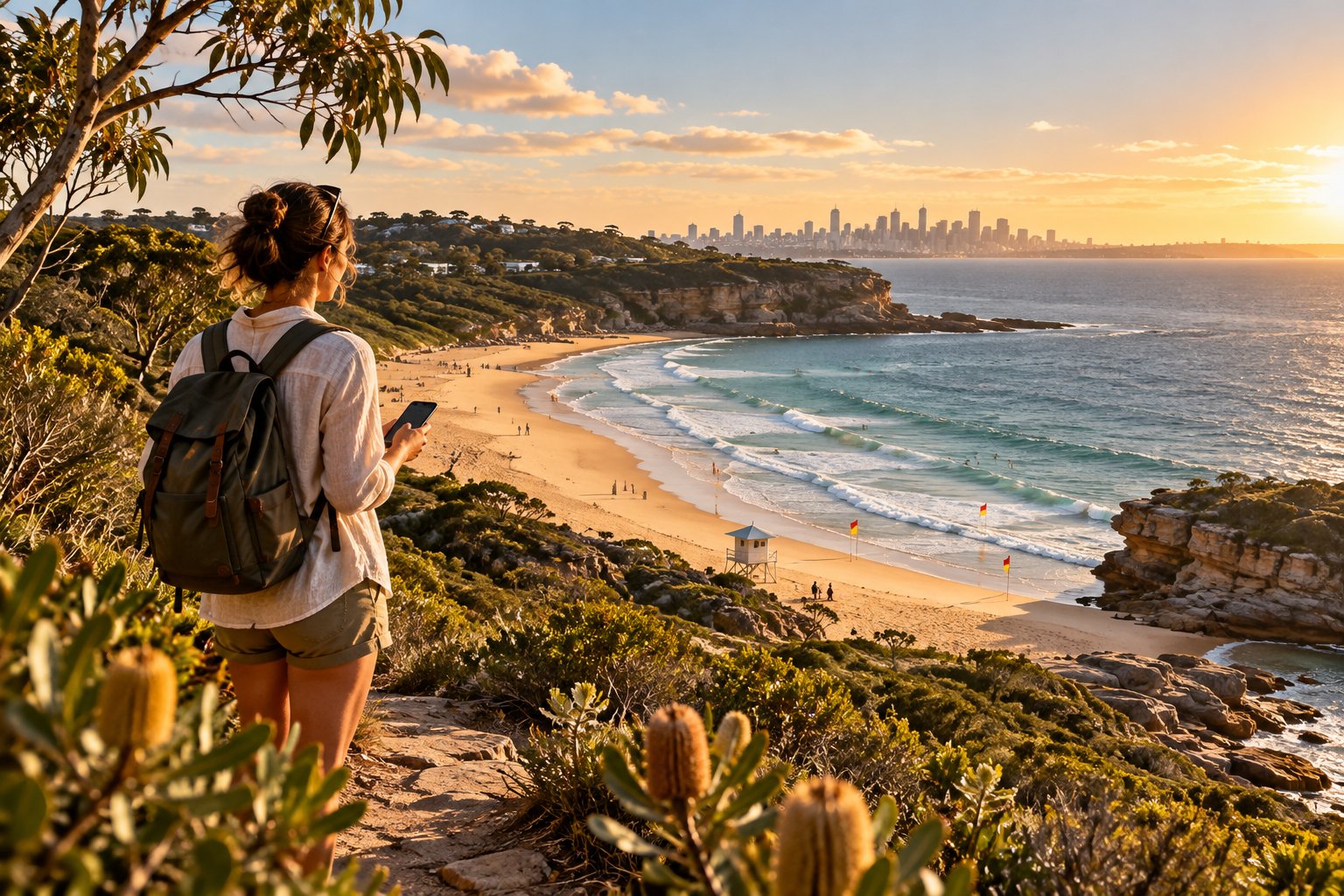
Australia is one of the biggest trips most people from the UK will ever plan. It's a long way, it's not cheap and the distances once you land are huge. The good news is that the practical side is easier than it looks. Here's what to sort out before you go: the entry permission, the flight, when to visit, health cover and the apps worth having on your phone.
Do you need a visa?
UK passport holders need an Electronic Travel Authority, or ETA (subclass 601), before flying. It's linked to your passport number, so a new passport means a new ETA. These are the key points from the Australian High Commission:
- Apply through the official Australian ETA app only. The app is the only application channel, so be wary of any website offering to do it for you, as they may charge extra
- The fee is AUD 20, paid by card, Google Pay or Apple Pay
- Everyone needs their own, including children
- It's valid for multiple entries for up to a year, or until your passport expires if that comes sooner, and each visit can last up to three months
- You can't work on it. It's for tourism and business visits
- Apply at least four weeks before you travel
Check the Department of Home Affairs website for the latest rules and fees before you apply, as they can change.
How long is the flight?
Plan for a long journey. Flights from the UK take roughly 16 to 30 hours, with an average of around 20 to 22 hours once you include a stopover. A few things to know:
- Qantas flies non-stop from London Heathrow to Perth in about 16.5 hours, with return fares around £1,500 or more, according to one guide
- One-stop routes are usually cheaper. A stopover in a hub such as Kuala Lumpur, Singapore, Doha or Dubai can bring return fares down to roughly £800 to £1,200
- Sydney takes longer than Perth. A route to Sydney via Kuala Lumpur is about 25 hours, for example
- Fares range from about £800 to £3,000 return, and flexible dates can lower the price
Our guide to what actually changes the price of a flight is worth a read before you book, and our guide to what you're owed if a flight is delayed or cancelled matters more than usual on a route with a connection.
When to go
Seasons are the opposite of ours. The most popular time for UK visitors is November to April, which is summer there.
- Spring (September to November): mild, around 11°C to 22°C on average. A good time for Perth, where one guide recommends September to November for spring sun without the worst of the sunburn risk
- Summer (December to February): warm, with averages around 18.6°C to 25.8°C. The best time for beaches, surfing and the Great Barrier Reef
- Autumn (March to May): often wetter and cooler, though it's good for food and wine festivals and the Melbourne Grand Prix
- Winter (June to August): the coldest months, with rain and cold spells. It's the season for skiing in New South Wales
Sydney is an all-year city. Australia is huge, so the weather can be very different from one region to the next, and it's worth checking your specific destination.
Money
Australia uses the Australian dollar (AUD). Cards and contactless payments are widely accepted, including on public transport in some cities, which we cover below. Check the current exchange rate before you go, because it moves. Our Trip Budget Calculator can help you set a budget using "My own numbers".
Health cover and insurance
The UK has a Reciprocal Health Care Agreement with Australia, which is helpful but limited. According to Services Australia, it covers:
- Medically necessary care out of hospital
- Medically necessary care as a public patient in a public hospital
- Some prescription medicines at the general rate
It doesn't apply if you travel to Australia specifically for medical treatment. You only need to enrol with Medicare if you need care, using a visa, passport and proof of UK residence such as a GHIC. Cover starts on arrival and ends when your visa expires. Because it's limited to public care, you should still get proper travel insurance, which our guide to whether you actually need travel insurance explains. For a long trip, SafetyWing's Nomad Insurance is one option to compare. Read the policy document first so you know exactly what's included.
Apps worth downloading
- Google Maps: journey planning, including public transport. Download offline maps before you go
- Uber: cashless rides in the cities
- BeachSafe: real-time beach information, including flags, lifeguards, hazards and water quality. Useful before you swim at any beach
- Emergency+: the official emergency app. It shares your GPS location with the emergency number 000
- AirRater: live air quality during the bushfire season, October to March
- TripView and the Opal app: for Sydney trains, buses and ferries. In Sydney you can also tap on with a contactless card or phone at Opal readers
- XE: a currency converter to compare prices with home
- WikiCamps: if you're planning a road trip or campervan, for campsites and caravan parks
To have mobile data as soon as you land, you could also use an eSIM. Nomad eSIM is one option. Check that there's a plan covering Australia and compare the price before you buy.
Staying safe and comfortable
- Sun: sun protection matters all year, so pack high-factor sun cream, a hat and sunglasses
- Beaches: swim at patrolled beaches between the flags, and check BeachSafe first
- Bushfire season: it runs from October to March, so check for local warnings if you're travelling in the countryside
- Snakes: keep an eye out when hiking, and consider a snake identification app
- Distances: the country is huge, so domestic flights are common. Don't try to cover too much in one trip
- Driving: Australians drive on the left, as in the UK. If you want to hire a car, you can compare prices on DiscoverCars
- Time difference: Australia is somewhere between 8 and 11 hours ahead of the UK, depending on the state and the time of year, so allow a few days to recover from jet lag
- Plugs: UK plugs don't fit, so pack an adaptor
What to visit
We'll cover this in more detail in separate guides. In short, most first-time visitors choose from Sydney for the harbour and beaches, Melbourne for food and culture, the Great Barrier Reef for snorkelling and diving, and Perth for sun and a more relaxed pace. If you'd like a guided option in the meantime, these are on Viator. It's worth checking what's included and the price before you book:
- In Sydney: a half-day Sydney city sightseeing tour, morning or afternoon
- Near Sydney: a small-group Blue Mountains tour with Featherdale and a ferry
- Near Melbourne: a Great Ocean Road tour with a reverse itinerary
Planning more? See all our Australia guides for UK travellers.
Where this comes from
Rules, fees and prices change, so this is a snapshot checked on 14 October 2026. These are the sources it draws on:
- The Australian ETA, fee and how to apply: Electronic Travel Authority (ETA), Australian High Commission
- Health cover for UK visitors: Visiting from the United Kingdom, Services Australia
- Flight times and fares: How long is a flight to Australia from the UK, A Backpacker's World
- Seasons and when to go: Best time to visit Australia, Allianz Assistance
- Apps: 10 must-have apps for visiting Australia, Culture Trip and Best Sydney travel apps, Sydney Tourism