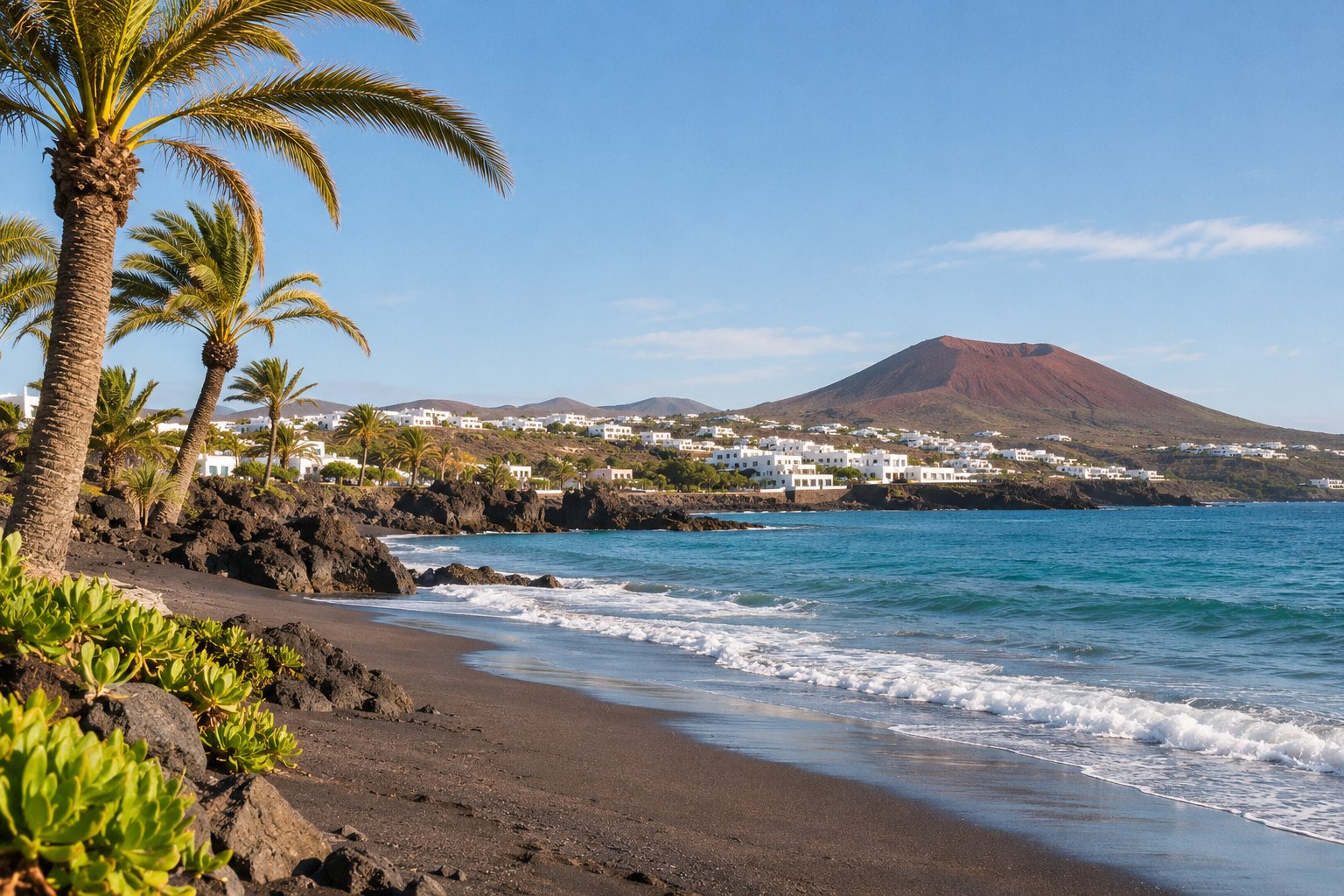
If you want winter sun without a long-haul flight, the Canary Islands are the obvious answer. They are warm in January, flights leave from airports all over the UK, and you will not need a visa. The harder part is choosing the island, because Tenerife, Lanzarote and Fuerteventura feel very different once you land.
This guide compares the three on weather, landscape and who each one suits, then covers flights, entry rules and the things most guides skip, such as Teide permits and wind.
The short version
- Warmth: all three sit at about 20 to 22°C by day in January. The differences are small, so pick the island for what you want to do rather than for a degree or two.
- Tenerife: the most varied. Resort beaches in the south, Mount Teide, water parks and the most flights.
- Lanzarote: the volcanic one. Dramatic scenery, Timanfaya National Park and a more relaxed feel.
- Fuerteventura: the beach one. Long sandy coastline and constant wind, which suits kitesurfers and walkers more than sunbathers on a bad day.
- Flights: about four to four and a half hours from most UK airports.
- Entry: your passport is still all you need, but EES checks mean you should allow extra time at the airport.
What the weather is really like
January averages from one weather guide give a good sense of how close the islands are:
| Island | Average high | Average low | Sea temperature |
|---|---|---|---|
| Tenerife (south) | about 22°C | about 15°C | about 20°C |
| Gran Canaria | about 21°C | about 15°C | about 20°C |
| Lanzarote | about 21°C | about 14°C | about 19°C |
| Fuerteventura | about 21°C | about 15°C | about 19°C |
Other sources put the daytime highs a degree or two lower, and one guide lists Tenerife as the coolest of the group. The pattern holds across them: all four islands are warm enough for a lunch on the terrace, but the sea is cool for swimming, and evenings call for a jumper.
Two things matter more than the averages. First, the north of Tenerife is cooler and wetter than the south, so a hotel in the north will feel different from one in Costa Adeje or Los Cristianos. Second, December is when rain is most likely, with some storms passing over the islands. Rainfall in January is described as low, at roughly 12 to 17 mm for the month in the figures above.
Tenerife: the all-rounder
Tenerife has the most to do. The south coast has the main resorts and beaches. Families usually choose it for the attractions, including Siam Park and Loro Parque. One guide notes the island is well developed and busier than Lanzarote, especially in peak season.
Mount Teide is the big draw. The cable car costs about €42 to €43 for an adult return (two sources give slightly different figures), and tickets need to be booked in advance through the official platform. The cable car can close in high winds, often at short notice, and the road to the park can be icy or closed after snow between November and March. Snow is possible above about 2,500 metres, and the top station is much colder than the coast, so take a proper coat.
If you want to go up to the crater itself, you need a separate permit, which one guide lists at €15. It must be booked in advance through the Tenerife ON platform, with new slots opening on Mondays and covering roughly three to eight weeks ahead. There is no same-day option, so plan this before you fly.
Tenerife has also been working on visitor limits. In 2025 the island announced plans for an eco-tax and a booking system for some popular trails in the Teide area, and reports said it was due in 2026. Amounts and start dates varied between reports, so check the official Teide and Tenerife ON sites before you go.
Lanzarote: the volcanic island
Lanzarote is flatter, drier and more open. Its draw is the landscape: black volcanic ground, white villages and a coast with rugged and sandy stretches. Playa Blanca and Costa Teguise are the popular resorts. One guide describes Lanzarote as hotter than Tenerife because of its arid landscape. Its winter figures are close to Tenerife's, though.
Timanfaya National Park (Montañas del Fuego) is the main sight. The entrance is at Taro de Entrada on the LZ-67 and includes parking, the geothermal demonstrations and a bus tour. The park lists opening hours of 9am to 3:45pm, and recommends visiting around 1pm. You cannot drive off the paved areas or walk on the lava. Check the current ticket price on the official site before you go. Other sights people mention include Los Hervideros and Jameos del Agua.
Lanzarote suits couples and adults looking for something different, and it is also described as a good family option. One guide calls it the best all-rounder of the Canaries, and it describes car hire as surprisingly affordable, though it gives no figures.
Fuerteventura: beaches and wind
Fuerteventura has the longest and widest beaches of the three. It is also the windiest, and one wind-sports spot, the Corralejo Dunes, is known for it. The dunes are a protected natural park, entry is free, and the park is popular for windsurfing and kitesurfing because the wind is constant. There are several beaches along the dunes, from quieter ones to places with children's play areas and restaurants. Rules on walking over the dunes and driving off tracks vary, so check signs on the day.
Boat trips go from Corralejo to Lobos Islet, which needs a permit and can only be reached by boat. You can also take a ferry from Playa Blanca on Lanzarote to Corralejo in about 25 minutes, which makes a day trip between the two islands possible.
Because it is windy, Fuerteventura is better if you like a breeze, a long walk on the sand and watersports than if you want to lie still. One guide says temperatures have rarely fallen below 16°C in winter.
Which one should you pick?
| If you want | Try |
|---|---|
| Lots to do, big resorts, a mountain and water parks | Tenerife (south) |
| Landscape, volcanoes and a quieter feel | Lanzarote |
| Long beaches, wind sports and space | Fuerteventura |
| Nightlife and a lively resort | Gran Canaria (Playa del Inglés) |
| Walking and green scenery | La Palma, which is a different trip |
There is no single winner, and different guides pick different islands. If you cannot decide, Tenerife is the safest choice for a first trip because it has the widest range of things to do and the most flights.
Getting there from the UK
Direct flights to Tenerife, Lanzarote and Fuerteventura take roughly four to four and a half hours. One airport source quotes around 4 hours 40 minutes from the Isle of Man, so allow longer from the north.
Jet2's winter 2026/27 announcement listed peak weekly departures from 13 UK bases. From Manchester, that was 18 flights a week to Tenerife, 11 to Lanzarote and 6 to Fuerteventura. Birmingham had 12, 9 and 5, and Stansted 11, 8 and 4. Routes and numbers change, and other airlines fly these routes as well, so check your own airport.
Tenerife has two airports, north and south. Most holiday flights use Tenerife South, which is the closest to the main resorts.
If you plan to explore, you can look at car hire with DiscoverCars and check the fuel policy, the excess and the driver age rules before booking. On Tenerife, a hire car can be the easiest way to reach Teide, though the mountain roads can be steep.
Entry rules and airport queues
You do not need a visa as a UK visitor, and ETIAS is not yet in force. One report in January 2026 said it would not become mandatory until at least spring 2027, but dates have moved before, so check the official position before you travel.
The EU's Entry/Exit System is already running. Tenerife South began using it on 6 November 2025. Expect to have your photo taken and fingerprints scanned on your first crossing (children under 12 are usually exempt from fingerprints), and allow extra time. Keep your return ticket, accommodation details, travel insurance and a card or cash to hand in case you are asked. For more, see our guide to new entry requirements travellers are missing.
When to go and when to book
The busiest weeks are the Christmas school holidays (21 December to 4 January in England and Scotland) and February half term (15 to 19 February 2027). Prices are usually highest then, so if you can go in mid-January or early March you often find more choice.
If you are tempted by an early package deal, read our Black Friday travel deals guide first. For a package with a flight, check it is ATOL protected, and if you book flights only, our guide to what you are owed when a flight is delayed or cancelled is worth a read.
Tours and things to book ahead
Popular excursions, such as boat trips, Teide tours and volcano visits, are best booked ahead in school holiday weeks. For Tenerife, you can look at a Teide National Park tour or a whale watching and swim yacht trip. On Lanzarote, there is a Timanfaya grand tour. On Fuerteventura, one option is a private south coast excursion. Check what is included, the pick-up points and the cancellation terms on each listing.
You can also browse tours and activities on GetYourGuide and check what is included and the cancellation terms before you pay.
Insurance, data and the little things
Travel insurance is worth sorting the day you book. Read our guide to whether you actually need travel insurance, and if you want to compare, you can look at SafetyWing. For data abroad, see our guide to eSIMs for travel from the UK. If you are comparing other warm places, our guide to winter sun short-haul destinations covers Madeira, the Algarve and Malta.
The islands have also seen resident protests about overtourism, alongside record visitor numbers. In 2025, more than 10 million international visitors arrived between January and August. It is worth being a considerate guest: stick to marked paths, respect park rules and book popular sights early.
A simple way to choose
- Decide what you want to do. Sightseeing and attractions point to Tenerife, scenery to Lanzarote, beaches and wind sports to Fuerteventura.
- Check flights from your airport to each island for your dates.
- Pick your dates carefully. Avoid school holidays if you can.
- Book Teide and Timanfaya in advance if you want them.
- Sort insurance, car hire and data the day you book.
Our verdict
For a first winter trip, Tenerife is the safest all-round choice, with the most to do and the most flights. Lanzarote is better if you want landscape and a quieter pace, and Fuerteventura if you want long beaches and do not mind the wind. All three are warm in January, so choose by the kind of holiday you want rather than by a degree or two of difference.
Whichever you choose, book the popular sights early, check your entry paperwork and leave extra time at the airport.
Planning more? See all our travel guides for UK travellers.
Where this comes from
Opening times, timetables and prices change, so this is a snapshot checked on 16 November 2026. These are the sources it draws on:
- Guide to Canary Islands: January weather by island
- Weather2Travel: Canary Islands in January
- Holiday-Weather.com: Tenerife South January averages
- Dave's Travel Pages: Canary Islands winter weather
- Conversant Traveller: Tenerife or Lanzarote
- Holiday Extras: which is the best Canary Island
- Direct Ferries: winter family holidays in the Canary Islands
- Volcano Teide: cable car prices and opening times
- Nomado Travel: Teide National Park guide
- Euronews: Tenerife introduces new eco-tax
- Lanzarote tourism: visiting Timanfaya
- Lopesan: Corralejo Dunes
- Jet2: winter sun programme 2026/27
- Isle of Man Airport: Tenerife flights winter 2026/27
- Canarian Weekly: EES goes live at Tenerife South
- Canarian Weekly: ETIAS delayed until 2027
- Icelolly: UK school holiday dates