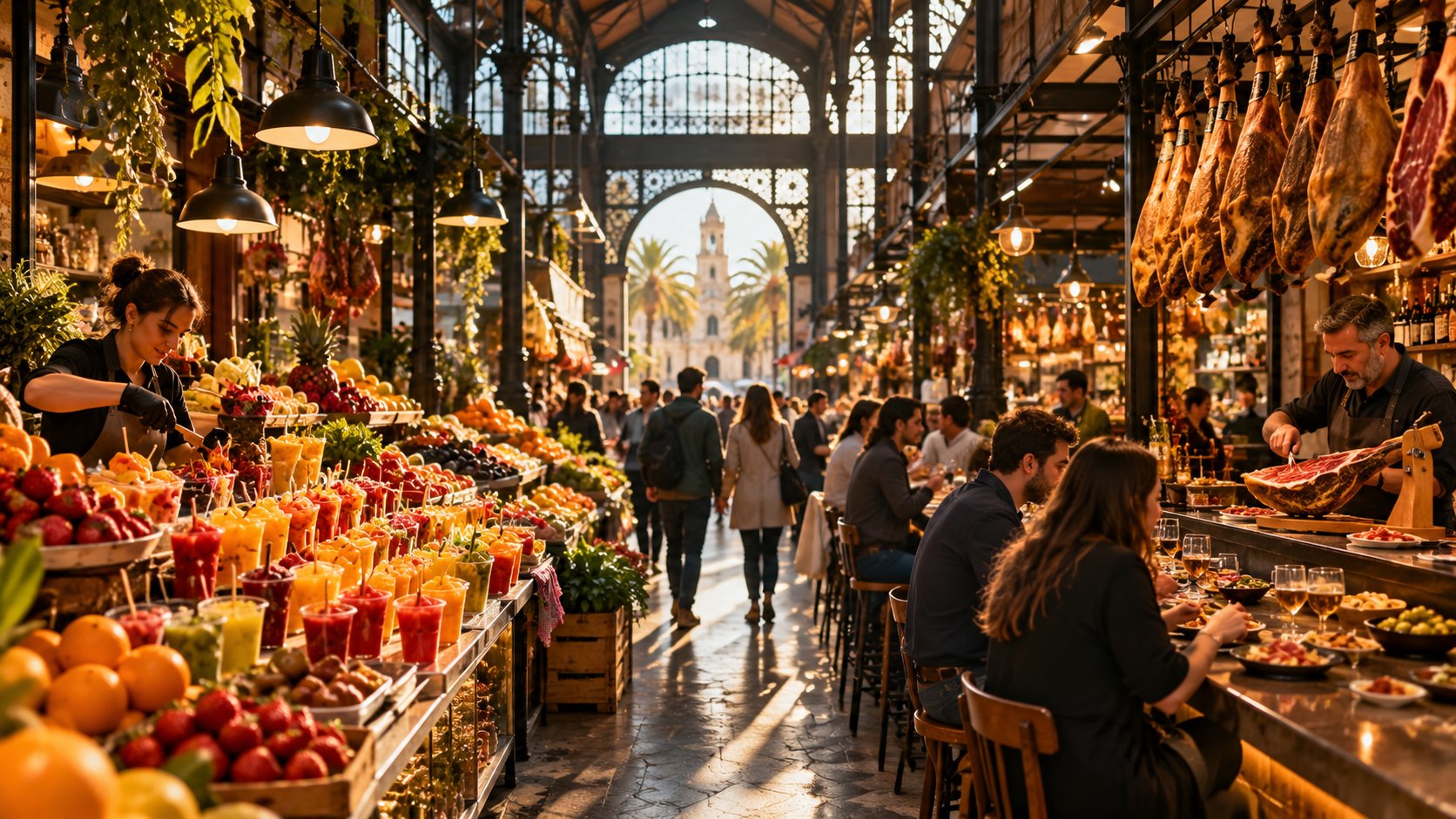
Some cities have a landmark. Others have a market that tells you more about the place than any landmark could. These are the ones worth building a weekend trip around, not just ticking off between other plans.
La Boqueria, Barcelona
Right off Las Ramblas, La Boqueria is one of Europe's most famous markets, and it earns the reputation. Stalls stacked with jamón, fresh seafood on ice, fruit cut to order, and a row of small counters where you can sit and eat tapas while the market works around you. Go early if you want it calmer, by mid morning it's properly busy.
Good to know: the stalls closest to the entrance are priced for tourists, walk a bit further in for better value and fresher produce.
See Barcelona market tours on Viator
Time Out Market, Lisbon
Built inside the old Mercado da Ribeira, this is less a traditional market and more a curated food hall, with stalls run by some of Lisbon's best known chefs and restaurants. It's a good way to try several different Portuguese dishes in one sitting without committing to a single restaurant for the night.
Good to know: it gets loud and full in the evening. A late lunch is a calmer way to see it properly.
See food tours in Lisbon on GetYourGuide
Naschmarkt, Vienna
Vienna's largest market runs for over a kilometre, with everything from spice stalls to Middle Eastern, Balkan and Austrian food stands, plus a Saturday flea market at the far end that's worth timing your visit around. It's as much a place to eat lunch as it is to buy ingredients.
Good to know: the Saturday market is significantly bigger than any other day, so if you want the flea market stalls too, plan your weekend around it.
See Naschmarkt food tours on Viator
Mercato Centrale, Florence
The ground floor is a working produce and butcher's market, proper old-school Florence. Upstairs is a food hall with pasta, pizza, and wine by the glass, open later than most traditional markets. It's a good stop both for a morning browse and an evening meal.
Good to know: the ground floor closes mid afternoon, but the upstairs food hall stays open into the evening, so you can go back for dinner.
See Florence food and wine tours on Viator
Markthalle Neun, Berlin
A restored 19th-century market hall in Kreuzberg, best known for Street Food Thursday, when the hall fills with vendors from all over the world rather than its usual produce stalls. Outside of Thursdays, it's a quieter, more local spot with a weekly farmers market too.
Good to know: Street Food Thursday is popular with locals and visitors alike, go hungry and go early if you want a seat.
Great Market Hall, Budapest
Budapest's largest and oldest market, housed in a striking building near the Liberty Bridge. The ground floor is all fresh produce, paprika, and traditional Hungarian ingredients, while upstairs is where to find lángos, a fried dough snack that's become a bit of a rite of passage for visitors.
Good to know: it's a short walk from the river, so it pairs well with a riverside walk either before or after.
Want a local to show you around instead of wandering alone?
Browse food and market tours on GetYourGuideTips for visiting food markets in Europe
- Go early for the atmosphere, go later for the food. Mornings are better for browsing without crowds, but some food stalls don't open properly until closer to lunchtime
- Bring cash. Plenty of the smaller stalls, especially in traditional produce markets, still don't take cards
- Check opening days. Many markets close on Sundays or Mondays, and some of the best stalls only appear on specific market days
- Eat standing up if you have to. Seating is often limited, and the best stalls tend to have the shortest queues if you're happy to eat where you stand